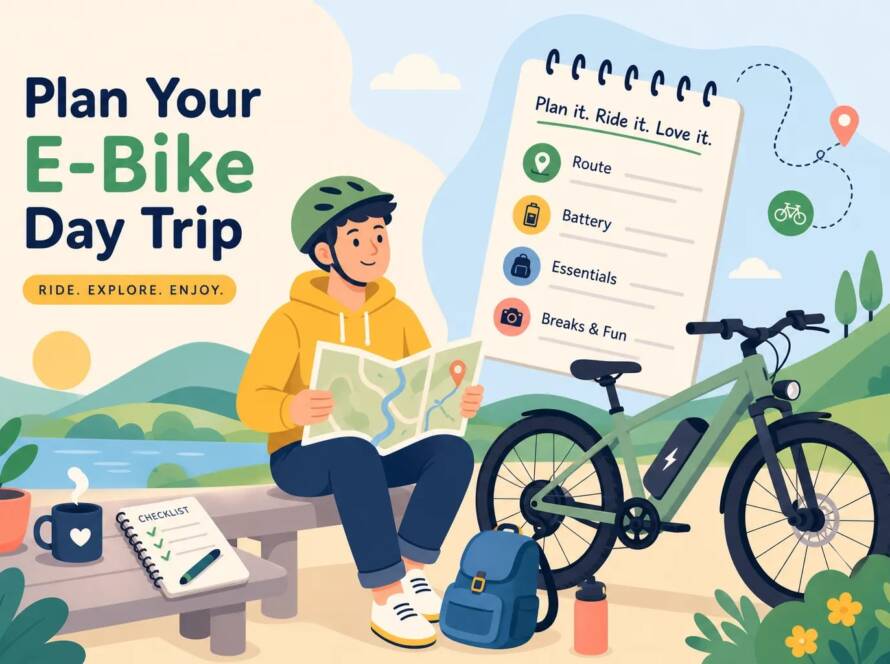
A great family e-bike adventure comes down to five things: the right bike setup for your crew, a route matched to your youngest rider, safety gear sorted before you roll out, a smart pack list, and rest stops built into the plan. Get those five right and the whole ride runs itself. Get them wrong and you’ll be the parent pushing a tired five-year-old’s bike up a hill while everyone’s snacks have run out.
E-bikes make family riding genuinely accessible because the motor handles the hills and the extra weight of a kid or cargo load. That pedal-assist power doesn’t plan the route, check the child seat harness, or remember the sunscreen, though. Whether you’re loading up an electric cargo bike for the first time or looking for a kid-friendly e-bike route you can download and follow at your own pace, this guide does that work for you.
Key takeaways
- Match the bike to your crew: Front-loaders handle the biggest loads, longtails haul two kids plus groceries, and midtails work best for one child in tight urban spaces.
- Youngest rider sets the ceiling: Plan distance and terrain based on your least experienced rider, not the fittest adult in the group.
- Safety gear is non-negotiable: Every child passenger needs a properly fitted, buckled helmet and a manufacturer-approved child seat with harness, footrests, and spoke guards.
- Pre-scouted GPS routes win: Generic map apps miss the details that matter on a family ride: rough surfaces, risky intersections, and bathroom locations.
- Build rest stops into the plan: Families with young kids should stop roughly every 30 to 45 minutes, before anyone complains.
Which family e-bike setup actually works for your whole crew?
Front-loaders, longtails, and midtails: what each one does best
The three main electric cargo bike designs each solve a different family problem. A front-loader puts kids in a box up front where you can see them and handles the biggest loads, but it has the largest turning radius and needs the most storage space. A longtail stretches the rear rack to fit two child seats and groceries, making it the best everyday hauler that still rides like a regular bike. A midtail is shorter and more nimble, better for one child and urban riding where maneuverability matters more than maximum capacity.
Choosing between them is essentially a question of how many kids you’re hauling and how much city navigation is involved. Families with two kids and an actual grocery run to handle should lean toward a longtail or front-loader. Single-child households in dense urban areas will likely find a midtail is all they need.
Top family e-bike models worth comparing in 2026
The best family e-bikes span a wide price range. For most families, the sweet spot is a cargo model that balances payload, range, and price without requiring a second mortgage. Here’s how the leading options stack up.
According to Bicycling.com and Outdoor Gear Lab, the Aventon Abound LR earned an 87 out of 100 test score, with stable handling under load and a 450-pound total payload. Its measured range on a single battery was 21.9 miles, so the dual-battery version is the smarter call for longer family outings. The Lectric XPedition 2 delivers the best hauling capacity per dollar, complete with UL 2849 safety certification, according to ebikeoracle.com. For families with two kids and a bigger budget, the Tern GSD Gen 3 pushes 120-plus miles on its dual-battery setup, according to riderguide.com.
When do family e-bike rentals make more sense than buying?
Guided family e-bike tours at major U.S. destinations typically run $70 to $190 per person, according to Viator and Urban AdvenTours. Private group packages, such as PikeRide’s guided options in Colorado Springs, start around $379 for groups of five to eight bikes, according to pikeride.org. That’s a solid way to find out if cargo e-biking is your family’s thing before you commit to a garage full of hardware.
Planning your family e-bike adventure route
Matching ride distance and terrain to your youngest rider
The youngest or least experienced rider in your group sets the ceiling for route difficulty, not the fittest adult. For families with kids under 8, paved rail trails and flat coastal paths keep the ride enjoyable and the complaints to a minimum. Many families find 8 to 12 miles manageable for a half-day, depending on kids’ ages and terrain, though your mileage (literally) will vary. Add hills or gravel, and you’ll spend more time managing anxiety than enjoying the scenery.
Great family-friendly options across the U.S. include the Minuteman Bikeway in Massachusetts, the East Bay Bike Path in Rhode Island, Mission Bay paths in San Diego, and the Seminole Wekiva Trail in Florida. All are paved, mostly flat, and loaded with logical stopping points that give kids something to look forward to between miles.
Why pre-scouted GPS routes take the stress out of navigation
Generic map apps weren’t built for e-bikers towing a trailer full of kids. They miss the critical details: where the surface turns rough, which intersections are sketchy, and where the bathrooms are. Pre-scouted, kid-friendly GPS routes built on the Ride with GPS platform are worth every cent. At Fun E-Bike Adventures, every route has been personally ridden and mapped by our founder. Each one includes turn-by-turn guidance, points of interest, and insider stops that no algorithm would ever flag. Routes start under $6 and never expire once downloaded, no subscription, no group pace to keep up with, and no panicked guessing at intersections.
What safety rules actually matter when kids are on board?
Age guidelines and child seat e-bike rules that carry real weight
There is no single federal law governing child passengers on e-bikes in the U.S., so the binding limits come from the bike manufacturer, the child seat manufacturer, and your state. As a baseline, children under 12 months should not ride as e-bike passengers. From about 12 months to 4 years, a rear child seat works if the child can sit unsupported and wear a properly fitted helmet, according to REI’s cycling-with-children guidance. The manufacturer’s maximum age, weight, and seat ratings are the numbers that matter most, not the ones you think sound reasonable.
Never exceed the bike’s total payload or rear rack rating. Extra weight changes how the bike steers, brakes, and balances, and that difference is most obvious at low speeds during a tight turn. Use only manufacturer-approved passenger seats with a secure harness, footrests, and spoke guards. Rear seats like the Thule Yepp 2 Maxi and Bobike GO Maxi are widely compatible with popular family e-bikes including the Tern HSD and Tern GSD.
Helmet rules: why “optional” is not actually an option
Every child passenger needs a properly fitted, buckled bicycle helmet that meets the U.S. CPSC standard, regardless of whether your state legally requires it. Class 3 e-bike laws in many states require helmets for all riders and passengers, not just kids. An unbuckled helmet sitting loosely on a child’s head offers essentially no protection, according to CHOC Children’s Health. State helmet rules vary, so confirm what applies where you’re riding, but treat the law as the floor, not the ceiling. Helmet up regardless.
Packing checklist for a family e-bike adventure
The essentials that belong in every family kit
Pack light but pack smart. Every family e-bike outing needs a basic repair kit (tire levers, patch kit, mini pump), a compact first-aid kit, fully charged phones, a portable battery bank, and sunscreen. A waterproof pannier on the rear rack keeps this gear organized and easy to grab on the go. Load your route onto the Ride with GPS app in offline mode before leaving so a dead cell signal doesn’t strand you at a fork in the trail.
For child-specific gear, pack a spare outfit, extra layers (since kids cool down faster when seated), sunscreen, a hat, and diapers or wipes if relevant. Comfortable cycling clothes and supportive shoes for every rider round out the basics, according to Tern Bicycles and REI’s day-ride guides.
Snacks, hydration, and the morale factor
You cannot skip hydration, especially with kids along. Pack more water than you think you need, the right amount depends on temperature, exertion, and how old your riders are, so err on the side of extra. Pack more snacks than you think you need, too: nothing derails a family e-bike tour faster than a hungry seven-year-old three miles from the trailhead. Easy-to-carry options like trail mix, fruit pouches, granola bars, and sandwiches work well in a handlebar bag or front basket.
How do you plan rest stops that actually keep everyone happy?
How often to stop and how to read the signs
Plan a rest stop every 30 to 45 minutes, or roughly every 3 to 6 miles depending on pace and terrain. Don’t wait for someone to complain, by the time a kid says they’re tired, you’ve already waited too long. Families with very young or inexperienced riders should use a “little and often” approach, with stops near shade, restrooms, or playgrounds, according to Cycling UK’s family-ride guidance.
Scout stops in advance by looking for playgrounds, picnic tables, waterfront spots, or ice cream. These aren’t just logistical pauses. They’re the parts of the ride everyone actually talks about when you get home.
Using GPS routes to find the best mid-ride moments
This is where a well-mapped GPS route really earns its keep. Our pre-scouted routes at Fun E-Bike Adventures go well beyond what any generic app surfaces: local waterfront parks, quirky landmarks, and shaded rest areas discovered by actually riding each route. Our upcoming Premium Adventures, launching in 2027, will add restroom locations and dining recommendations directly into the route. That’s exactly the kind of detail that turns a good family outing into one the kids ask to do again.
The bottom line on planning your family e-bike adventure
A family e-bike adventure is one of the best things you can do on a weekend with kids. It’s active, flexible, and the motor takes the sting out of the hard parts. The key is doing the planning work upfront: pick a bike setup matched to your family’s size, lock in a route calibrated to your youngest rider, check every safety requirement before you clip in, pack the right gear, and build rest stops into the schedule from the start.
If planning every detail feels like too much, start with a pre-scouted GPS route built by someone who already did the legwork. Fun E-Bike Adventures offers hand-curated routes starting under $6, each one personally ridden and mapped by our founder, ready to download and keep forever on the Ride with GPS platform. No group pace, no expiration date, no tipping required.
The hardest part is already done. Now go ride.
Frequently Asked Questions
How far will a family e-bike go on a single charge?
Range varies by model, but the Aventon Abound LR measured about 21.9 miles on a single battery, and models with dual batteries like the Tern GSD can push 120-plus miles on their dual-battery setup. For family outings we recommend the dual-battery option when you want longer range without worrying about running out of power.
Which child seats meet the safety requirements for e-bike passengers?
Use only manufacturer-approved passenger seats with a secure harness, footrests, and spoke guards; rear seats like the Thule Yepp 2 Maxi and Bobike GO Maxi are widely compatible with popular family e-bikes including the Tern HSD and Tern GSD. Always follow the seat and bike manufacturer limits for age, weight, and mounting.
What safety gear beyond helmets should we never skip when kids are on board?
Never skip a manufacturer-approved child seat with a secure harness, footrests, and spoke guards, and never exceed the bike’s total payload or rack rating. Those measures, combined with a properly fitted, buckled CPSC-standard helmet, are the basics that actually protect child passengers.
Can children under 12 months ride as e-bike passengers?
No, children under 12 months should not ride as e-bike passengers. The baseline guidance is to wait until a child can sit unsupported and wear a properly fitted helmet before using a rear child seat, typically around 12 months or older.