So you’ve decided to explore somewhere scenic on an e-bike, great call. But now you’re staring at two options, falling down a Google rabbit hole, and finding zero clarity on which one is actually right for you. Do you book a guided tour and show up with nothing but sunscreen? Or do you grab a GPS route and go on your own terms? It sounds like a simple choice until you realize the real differences go way beyond “group vs. solo.”
If you’re wondering what is the difference between self-guided and guided e-bike tours, the honest answer is: quite a lot. The gap covers cost, logistics, safety, how much responsibility you want to carry, and honestly, how you like to spend your time outdoors. There’s also a third option worth knowing about: no group, no schedule, no premium price tag. Just a hand-curated GPS route built by someone who already scouted every mile for you. More on that shortly.
Here’s the clear, no-fluff breakdown you actually need, so you can pick the format that fits your skill level, budget, and travel style without second-guessing yourself at checkout.
What each tour type actually means
Before comparing anything, it helps to get the definitions straight. Think of a guided tour like a restaurant reservation with a personal concierge: someone else handles every detail and you just show up hungry. A self-guided cycling holiday is more like booking the table yourself and navigating with a map you trust. Same destination, very different experience getting there.
How a guided e-bike tour works
A licensed guide leads the group, sets the pace, manages navigation, and handles logistics in real time. Group sizes typically run 6 to 14 riders per guide, and on premium or multi-day trips, a second guide may ride along or follow in a support vehicle. On most full-service guided packages, route selection, accommodations, and transfers are commonly managed by the operator, though exact inclusions vary, so always verify with your specific operator. You just ride.
What a self-guided tour actually looks like
Independent e-bike tours mean riders follow a pre-planned GPS route on their own, choosing their start time, pace, and stops. At the more supported end, packages commonly include luggage transfers between accommodations, pre-booked hotels, and a local emergency hotline. At the most accessible end, you purchase and download a GPS route file, load it into a navigation app, and ride whenever you’re ready. The defining feature is consistent across all self-guided formats: no guide on the road with you.
What is the difference between self-guided and guided e-bike tours when it comes to inclusions?
This is where most riders get surprised by the fine print. The word “included” does a lot of heavy lifting in tour descriptions, and what it actually covers varies more than you’d expect.
The guided tour bundle: guides, vans, and meals
A full-service guided package typically covers the guide’s time, a support vehicle for luggage and mechanical issues, breakfast and often lunch, pre-booked accommodations on multi-day trips, and scheduled transfers. Some operators include entrance fees and curated activities along the route. The support van is a key detail to confirm, because not every day tour includes one, and a van makes a significant difference if something goes wrong on a remote stretch.
What self-guided packages provide (and what they don’t)
Standard supported bike tour packages include downloadable GPS tracks or app access, pre-booked hotels with breakfast, hotel-to-hotel luggage transfer on multi-day formats, and a local emergency hotline number. What they don’t include: someone showing up within the hour if you have a problem. A 24/7 support number is real and useful, but it is not the same as a guide who is physically present with your group. Mechanical repairs and most meals beyond breakfast are generally the rider’s responsibility.
The cost gap: what you’re actually paying for
The price difference between guided and self-guided e-bike tours is real, and it scales up fast, especially on multi-day itineraries. Guided tours typically run 20 to 40% more than comparable self-guided packages, and the reasons behind that gap are easy to understand once you see what’s driving the number.
Guided tour pricing and what drives it up
In the U.S., full-service guided e-bike tours at the premium end run roughly $250 to $500 per person per day, that’s the top tier, not the average. Half-day and shorter tours are more commonly priced around $70 to $125 per person, which is closer to the 2026 average for a standard guided outing. That cost reflects the guide’s time and expertise, the support vehicle, included meals, and the operational overhead of managing a group of riders across changing terrain and conditions. The premium isn’t arbitrary. It reflects genuine staffing and logistics costs that someone has to cover.
What self-guided touring actually costs
Self-guided packages cost significantly less because you remove the guide, the van, and most included meals from the equation. Downloadable GPS route options, like those from Fun E-Bike Adventures, sit at the most affordable end of the spectrum. Keep in mind that once you add restaurant meals, bike rental if you don’t own one, and any emergency transport, the real-world cost of a fully independent e-bike trip can climb. But it still lands well below guided pricing for most riders.
Freedom vs. structure: which experience fits your style
Logistics and cost aside, the biggest factor for most riders is actually how they want to feel on the ride. This is where your personality and travel preferences settle the question.
What you gain (and give up) on a guided tour
Guided tours deliver a built-in social experience, zero logistical headaches, and a safety net that’s physically present on the road. They’re a strong fit for first-timers on challenging or unfamiliar routes, solo travelers who want company, and riders who genuinely prefer letting someone else manage the details. The tradeoff is real though: you move at the group’s pace, stick to the fixed itinerary, and share your ride with strangers who may not match your speed or interests. For some people, that’s fine. For others, it’s a dealbreaker by mile three.
Who actually thrives on a self-guided adventure
Self-guided touring is built for riders who want to set their own schedule, detour on a whim, and stop for that coffee shop without asking permission. It works especially well for couples, small groups of friends, and riders with some navigation confidence who already know how to handle basic situations on the road. The key ingredients are a reliable GPS route and enough mechanical awareness to deal with common issues before they become bigger ones.
When things go wrong: safety, battery, and support realities
This is the section most comparison articles skip over or soften. Don’t go into either format without understanding the real differences in what happens when something unexpected occurs.
Emergency response: guided vs. on your own
On a guided tour, the guide is physically with you. They carry first aid supplies, can call for backup, and some operators advertise support vehicle dispatch within roughly 60 minutes of an incident, though response times vary by operator and route, so confirm this before booking. On a self-guided tour, emergency support is typically a phone hotline and, depending on the operator, a local contact who may take time to reach you. Neither format replaces personal travel insurance, and riders should confirm the actual emergency protocol before booking either type, including whether a vehicle is available, what the realistic response time is, and whether the route has reliable cellular coverage.
Battery range and mechanical prep for solo riders
Self-guided riders carry more responsibility here than most people anticipate. There is no support van with a spare battery if you run low on a remote stretch with hills ahead. Plan your daily mileage well within your bike’s real-world range, and account for headwinds and elevation. Carry a basic repair kit, pump, spare tube, tire levers, and a multitool, and have a fallback route or recovery plan if the electrical system fails. On guided tours, the operator typically designs stages to match the fleet’s battery capacity, and guides can assist with minor mechanical issues along the way.
Your easiest entry point into self-guided e-biking
If the self-guided format sounds right for you, the smartest starting point isn’t building a route from scratch on a general mapping app. It’s using a GPS route that someone who actually rides has already scouted, tested, and refined for you.
Why a downloadable GPS route beats building your own from scratch
Most riders underestimate what goes into planning a genuinely good e-bike route: identifying safe road surfaces, locating points of interest, accounting for battery range across terrain, and figuring out where to stop. A hand-curated GPS route removes all of that guesswork. Fun E-Bike Adventures offers routes built on the Ride with GPS platform, loaded with turn-by-turn navigation, points of interest, and local knowledge that no general mapping algorithm can replicate. Each route is designed and verified for e-bike riding before it goes on sale.
How the downloadable route model works
You purchase a route, download it to the (Free) Ride with GPS app, and ride whenever you’re ready. There’s no fixed schedule, no group pace to match, and no gratuity expected. It’s the self-guided format at its most accessible, whether you’re a tourist exploring a new city or a local ready to finally discover what’s in your own backyard.
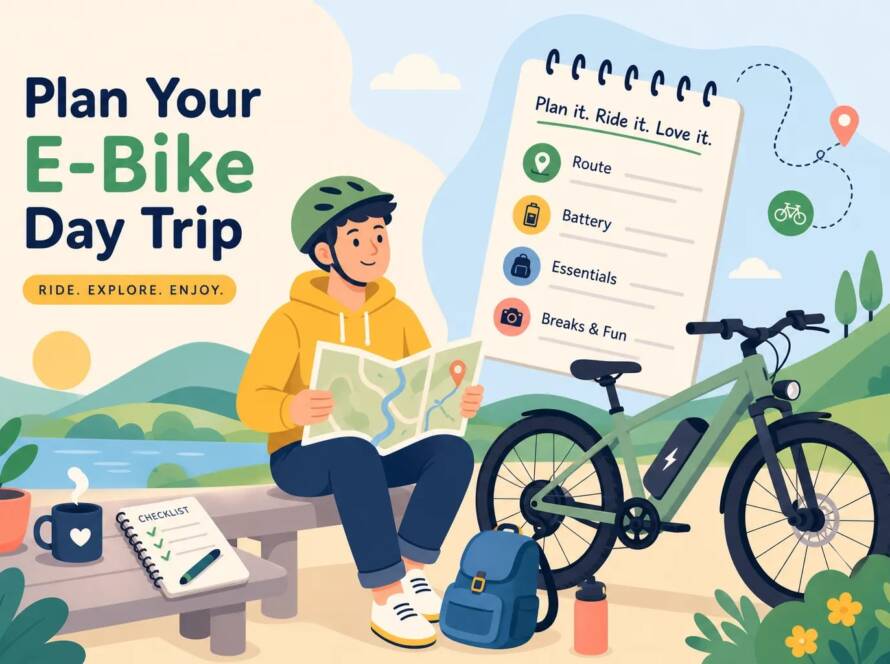
Quick checklist before your first self-guided ride
- Confirm your e-bike is fully charged and mechanically sound before leaving
- Download your GPS route offlinewhile you’re still on Wi-Fi
- Pack a basic repair kit: pump, spare tube, tire levers, and a multitool
- Know the day’s total mileage and plan a buffer for your battery
- Save a local emergency contact and check cellular coverage along the route
- Get travel insurance that explicitly covers e-bike riding
The bottom line on choosing your format
Understanding what is the difference between self-guided and guided e-bike tours really comes down to three things: how much support you want on the road, how much flexibility you need in your schedule, and what you’re willing to pay for both. Guided tours are worth the premium for riders who want zero logistics, a social experience, and a physical safety net throughout the ride. Self-guided touring is the right move for riders who want control, value, and the freedom to explore at their own pace.
For anyone leaning toward the self-guided side, a downloadable GPS route is often the most affordable and accessible starting point available. Fun E-Bike Adventures offers curated routes built for U.S. riders who want the feel of an expert companion without the cost, tipping obligation, or time constraints of a traditional guided tour.
Browse the available routes, pick the one that fits your next adventure, and ride on your own terms. Your bike is charged and your route is ready, the only thing left is to go.